A letterbox drop is a print job and a logistics job
Unaddressed flyers dropped into letterboxes are still one of the most common ways for local businesses in Singapore to reach a neighbourhood. Tuition centres, renovation firms, food delivery outlets, clinics, property agents and new shops all use them. The print itself is simple: an A5 or DL flyer, sometimes a folded leaflet. What makes a letterbox drop work is everything around the print. The quantity has to match the households in the area, the flyers have to arrive bundled the way the distribution team needs them, and the whole run has to land in the right week.
This guide covers how to plan the print side of a door-to-door distribution: working out quantities, choosing a format that survives the letterbox, bundling and packing for the distributors, and scheduling so the flyers go out when they will do the most good.
Working out the quantity
Start from the area, not from a round number. Decide which blocks, streets or estates you want to cover, then find out roughly how many households that is. A distribution company will usually give you a household count for the zones they cover. Then add:
- Spoilage and overs: a small margin for flyers damaged in handling or rejected at a block.
- Counter copies: a stack for your own shop, reception or event table.
- Follow-up drops: if you plan to repeat the drop a few weeks later with the same flyer, printing both runs together is usually cheaper per piece.
Be careful with the last point. If the second drop will carry a different offer or date, it is a different flyer. In that case, look at printing several versions in one run, as described in our guide to multi-version bulk runs. It is also worth agreeing an overs and unders tolerance with the printer, since delivered quantities on bulk runs vary slightly; our article on overs and unders explains why.
Formats that survive the letterbox
A flyer that is too big gets folded or crushed on the way in. One that is too thin looks cheap and tears. Typical choices are:
| Format | Fits letterboxes | Notes |
|---|---|---|
| A5 flyer, single sheet | Yes, flat | Most common; enough space for an offer, a map and a QR code |
| DL (one-third A4) | Yes, flat | Narrow and tidy; good for menus and price lists |
| A4 folded to A5 or DL | Yes, folded | More content; adds a folding step to the schedule |
| A4 flat | Often has to be folded by hand | Slows distribution and looks untidy |
| Postcard on heavy card | Yes | Feels more valuable, tends to be kept longer |
For single-sheet flyers, a mid-weight coated paper is a common choice: stiff enough to slide into a slot without crumpling. Folded leaflets work better on a slightly lighter stock so they fold cleanly. Ask your printer for a sample of the paper before a large run.
Bundling and packing for the distributors
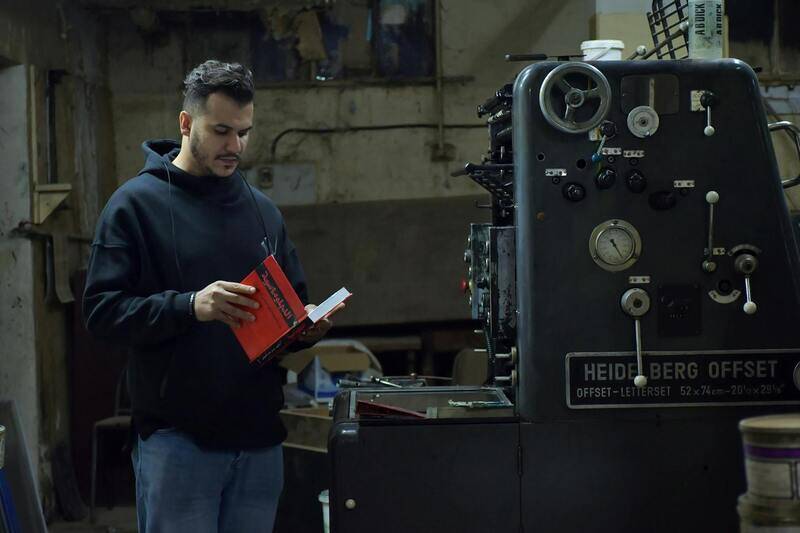
This is where letterbox drops differ from most bulk print. The distribution team does not want one big pallet. They want flyers in counted bundles they can carry through a block, packed so that each team member gets a predictable load.
- Counted bundles: banded or shrink-wrapped in a fixed count, such as 100 or 250. Ask the distributor which count they prefer.
- Carton weight: cartons a single person can carry up a stairwell or along a corridor. Heavy cartons slow the team down.
- Labelling by zone: if the drop covers several areas on different days, label each carton with its zone and quantity.
- Delivery point: send the cartons to the distributor's depot or to a meeting point, not to your office, unless you plan to hand them over yourself.
Treat the hand-over like any other delivery and check it when it arrives. Our notes on checking a bulk run on arrival apply here too. If flyers go to several shop branches as well as the distributor, see our guide to distributing a run to multiple branches.
Scheduling the drop
Work back from the date you want people to see the flyer. A flyer for a weekend promotion that lands on Sunday evening is wasted. A tuition centre flyer that arrives the week after enrolment decisions are made has missed the point.
- Distribution window: ask the distributor how many days they need to cover your zones. Large areas may take several days.
- Print and finishing: single-sheet digital or offset runs are fast; folding and bundling add time.
- Artwork and proofing: allow at least a day for corrections, especially if the flyer has prices, dates or a phone number.
- Buffer: leave a small margin before the distribution starts in case the courier or the weather causes a delay.
Avoid peak periods if the date is flexible. In the weeks before major festivals, printers and distributors are both busy, and lead times stretch.
Design points for a flyer that gets picked up
Most letterbox flyers are looked at for a few seconds on the way from the letterbox to the bin. The design has to work in that time.
- Put the offer and the business type at the top, large enough to read at arm's length.
- Show the area you serve, or a small map, so residents see the business is nearby.
- Use one clear call to action: a phone number, a WhatsApp number or a QR code, not all of them at equal size.
- Print an expiry date on time-limited offers, so the flyer is not used a year later.
- Leave a quiet margin around the edges; trimming on a bulk run can shift by a millimetre or two.
A flyer with a useful reference, such as a price list or opening hours, is more likely to end up on a fridge door than one with only a slogan.
Checking the area rules before printing
Not every building accepts flyers. Some condominiums do not allow unaddressed flyers in letterboxes, and security staff may stop distributors at the gate. Some HDB blocks have notices about advertising materials. A reputable distribution company will know which areas can be covered and will plan around restrictions. Ask them before you set the quantity, so you are not printing for blocks that cannot be reached.
The flyer itself should include your business name and a way to reach you. If you are promoting a regulated service, check what your industry rules say about advertising content.
Measuring the response
A letterbox drop is easier to judge when each zone is tracked. Simple ways to do it:
- A different promo code per zone, printed as a version change in the same run.
- A QR code with a zone tag in the link.
- Asking customers where they saw the offer.
After two or three drops, you will know which areas respond and can adjust the quantity for the next run. Our guide to forecasting print quantities covers how to use that data.
Printing your letterbox drop with fastprinting.org
We print flyers and leaflets for letterbox drops across Singapore, from a few thousand for a single estate to large multi-zone runs with versioned promo codes. We can band and carton by count, label by zone and deliver to your distributor's depot on a fixed date. Tell us the zones, household count and the date you want the flyers in letterboxes, and we will work back to a print schedule and a quote. See our digital printing options for short runs, or contact us through our contact page.