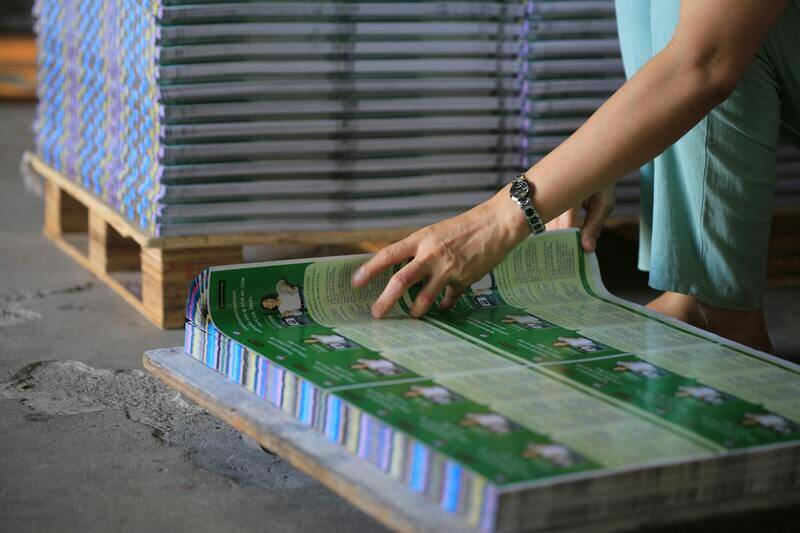
The problem with checking 20,000 of anything
On a short run, you can flick through the whole job. On a run of 20,000 brochures packed in 80 cartons, you will open a handful and hope. Most of the time that is fine. Occasionally a batch has a drift in colour, a misaligned fold or a binding fault that begins halfway through the run, and it lands on a customer's desk with your name on it.
Quality checks for a bulk job are not hard, but they need to be planned before the pallet arrives. This guide covers what to agree with your printer before printing, how much to sample, what counts as a real defect and what to do if you find one. It is written for marketing and procurement teams who buy print in volume, and who need to sign off a delivery without taking a whole day to do it.
Agree the standard before the press starts
You cannot reject a job fairly against a standard that was never stated. Put the following in writing with the order, or ask your printer to confirm their usual tolerances:
- A colour reference: a signed press sheet, an approved contract proof or a previous job. Screen colours do not count.
- Trim and fold tolerance: small movement across a run is normal, so ask what your printer considers acceptable.
- Quantity tolerance: the agreed overs and unders. See our guide to why the delivered quantity varies.
- Packing: quantity per carton, carton labelling and the number per pallet.
- Critical items: anything that must be right on every copy, such as a barcode, a serial number, a statutory notice or a product code.
If a job has a press check, keep a signed sheet. It is your best evidence of what was approved, and our article on press checks and sign-off on a bulk run explains how to do that well.
How many copies to check
Checking every copy of a large run is rarely realistic, and checking only the top of the first carton tells you nothing about the rest. What you want is a spread of copies across the run.
A simple spread for routine jobs
- Open a set number of cartons from different pallets, including the first, the last and some from the middle, using the carton numbering where the printer has provided it.
- From each opened carton, take copies from the top, the middle and the bottom of the stack.
- Check those copies against your colour reference and defect list.
- Note carton numbers and what you find, even if everything is fine.
AQL sampling for higher-risk jobs
Where a defect would be costly, such as packaging, pharmaceutical inserts or regulated labels, buyers often use acceptance sampling based on the ISO 2859 tables, usually known as AQL. These tables set how many items to inspect and how many defects are allowed, given the batch size and how strict you need to be. Agree the level with your printer in advance. Critical defects are usually treated more strictly than minor ones, and for some, such as a wrong dosage or a barcode that does not scan, the acceptable number is zero.
For very high-risk items, sampling is not enough on its own. Inline camera inspection on the press or the finishing line can check barcodes and print on every copy, and it is worth asking whether your printer can offer it.
What to look for
A short checklist keeps your checks consistent, whoever does them. Print one for the person receiving the pallet.
| Area | What to look for | How to check |
|---|---|---|
| Colour | Drift across the run, uneven tone within a sheet | Compare samples side by side with your reference in good light |
| Registration | Colours out of line, fuzzy text or halos around images | Look at fine type and edges with a magnifier |
| Trim and fold | Uneven margins, skewed folds | Stack several copies and look at the edges |
| Binding | Pages coming loose, wrong order, crooked staples | Flip pages, and tug gently at a page near the middle |
| Marks | Hickeys, scratches, set-off from one sheet onto the next | Look at solid colour areas and facing pages |
| Coating and lamination | Bubbles, peeling, cracks at folds | Fold a sample and inspect the crease |
| Barcodes and codes | Readable, correct, unique where needed | Scan samples with a real scanner |
Keep your standards realistic. Small colour variation across a very long run is normal in offset, and a press operator will be working to keep it within tolerance. The test is whether a copy still matches the approved reference to a normal reader, and whether two copies placed side by side look like the same product.

Who should check, and when
Ideally your printer's own QC catches problems before anything leaves the building, and you should ask how they do it. A reasonable printer pulls samples at regular intervals during the run, and keeps them with the job file. Ask if you can have a few from different points of the run. Those can reveal drift far more efficiently than opening cartons later.
At your end, assign the checks to a named person, and allow enough time. The moment the pallet arrives is also the moment to check for transit damage, and that has its own routine, described in our article on cartons, wrapping and receiving a pallet. Do these checks before you ship anything out to branches or customers. Once stock has gone out to twenty outlets, a problem costs far more to fix.
When you find a problem
Stay practical. Most printers would prefer to know quickly and solve it sensibly.
- Stop distributing the affected stock, and keep the cartons together.
- Record what you found: carton numbers, photos in good light, and a few physical samples.
- Work out how much is affected. Open more cartons near the bad ones to see where the fault begins and ends.
- Contact your printer quickly, and send photos along with your reference. Check their terms, because many set a time limit for reporting faults.
- Agree the fix: this may be a reprint of the affected portion, a credit, a sort of the stock to remove bad copies or an agreed price reduction if the fault is minor and the deadline matters more.
Keep the difference clear between a fault and a preference. If you approved a proof and the job matches it, a change of heart on colour is a new job. If the job does not match what you signed off, you have a fair case. Clear records on both sides make that conversation short.
Building checks into regular orders
If you buy the same items often, a simple standard saves time. Keep one approved sample of each job on file. Reuse the same checklist and the same sampling each time. Record faults by supplier, even small ones, so your regular reviews rest on facts. Our guide to choosing a printer for regular bulk orders suggests what else to bring to those reviews.
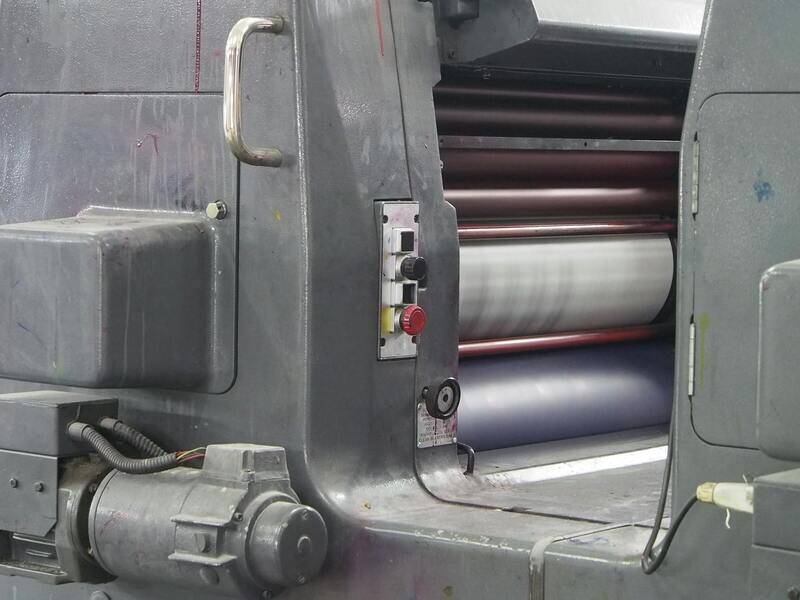
Bulk print with checks built in
We print long runs for Singapore companies with sampling during production and agreed packing, and we are happy to put your standards in writing before the job starts. If you have a critical item such as a barcode, tell us at the outset so we can plan how to check it.
Send us your specification and how you plan to accept delivery, and we will tell you how we would approach it. We can also keep press samples from the run for your records. Reach us through our contact page, or read more in our guides to choosing print services.